
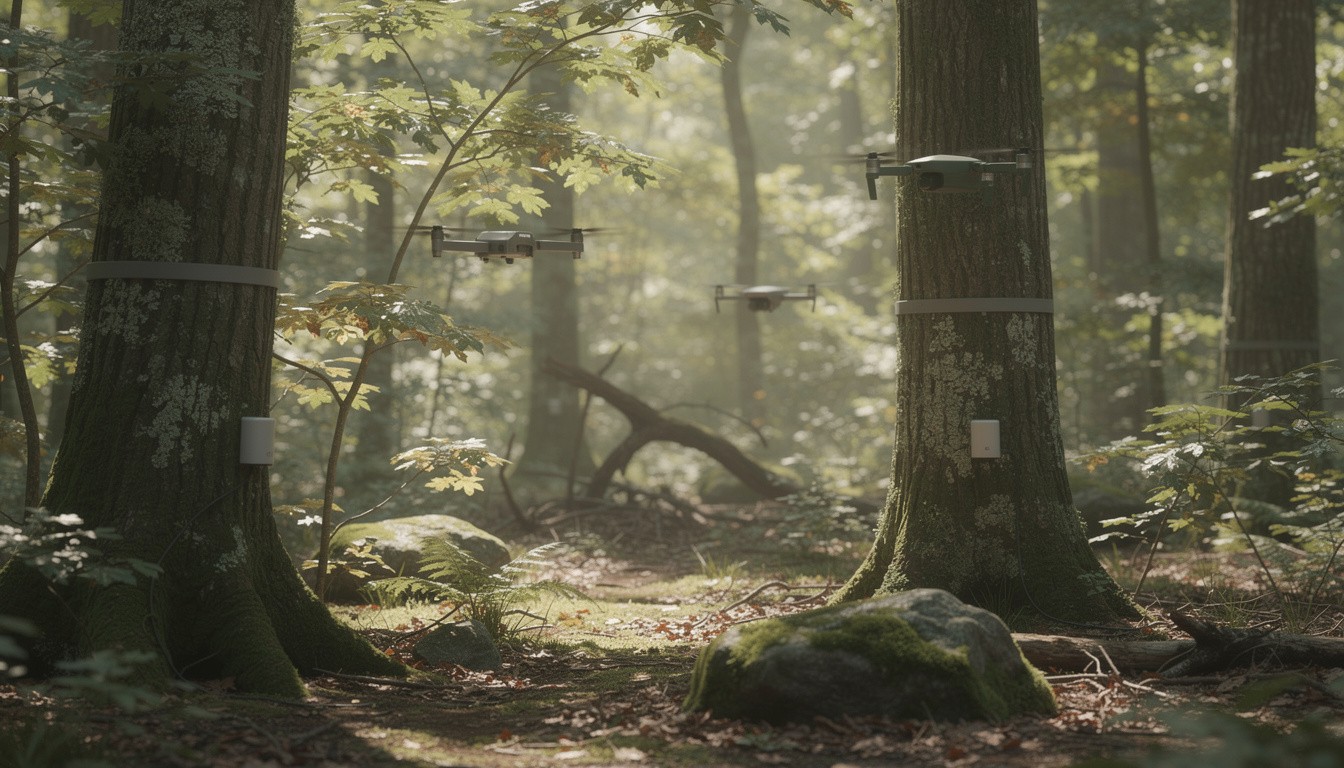
Today, the fusion of ecology and technology is unlocking new ways to understand and protect natural environments. Moving beyond traditional observation, researchers now rely on advanced digital tools and automation to map, measure, and restore complex ecosystems with unprecedented precision. This integration brings scalable solutions for conservation challenges while significantly enhancing ecosystem health assessment across the globe.
The role of technology in ecology and conservation
Modern science has evolved toward more sophisticated methods for studying nature. Technology in ecology and conservation is no longer limited to camera traps or animal tags. Today, entire landscapes are observed in real time through satellite imagery, sensor networks, and additional innovative tools. These advancements enable efficient monitoring of even the most remote regions, reducing manual labor and minimizing human presence in delicate habitats.
This shift boosts research accuracy and delivers insights that once seemed unattainable. Through ongoing technological improvement, interventions increase both data quality and response times—a win-win for global wildlife protection and monitoring efforts.
Biodiversity monitoring and habitat restoration
Biodiversity monitoring stands at the core of successful conservation. Whether tracking insect populations or endangered mammals, recording species behaviors provides invaluable data for habitat monitoring and restoration projects. Innovations such as remote sensors and automated image recognition streamline the process, making it easier to detect changes over time and address threats before they escalate.
Observing shifts in animal movement or the spread of invasive plants allows teams to respond swiftly. These findings inform management decisions, enabling more targeted actions that utilize fewer resources yet deliver better long-term outcomes for species survival.
Ecosystem health assessment advances
Previously, ecosystem health assessment depended heavily on fieldwork and subjective observations. Now, AI-driven algorithms analyze extensive datasets from sources like satellites, weather stations, and aquatic sensors, providing a comprehensive view of ecosystem vitality. Early alerts regarding pollution, disease, or water-quality issues empower swift intervention, supporting both conservation groups and policymakers in decisive action.
Although these approaches require robust infrastructure, their benefits are substantial. Communities enjoy cleaner air and water, and rare plant and animal species gain safer habitats through proactive preservation powered by rapid data analysis.
Drones, AI, and other digital innovations for wildlife
Drones and aerial mapping tools have redefined possibilities for wildlife protection and monitoring. By surveying vast forests, wetlands, or mountain ranges, drones capture high-resolution images quickly and with minimal environmental disruption. Automated flights provide frequent checks without disturbing sensitive species or endangering human safety in challenging terrain.
At the same time, artificial intelligence (AI) applications process immense volumes of photos, audio, and video collected continuously. Identifying animal tracks, recognizing vocalizations, or detecting habitat changes now requires just hours instead of months, making daily biodiversity monitoring far more accessible.
Automation in data collection and analysis
The efficiency gained through automation enables organizations to operate on much larger scales. Digital tools and automation systems handle streams of raw data, pinpointing trends and anomalies while reducing manual workload. For instance:
- Camera traps automatically upload photographs to centralized databases
- Acoustic sensors identify individual bird songs and amphibian calls
- Weather and soil monitors send continuous updates on micro-climatic changes in protected areas
This constant flow supports innovation and scalable solutions tailored to each ecosystem’s needs, offering actionable insights to scientists and local communities exactly when needed.
Bridging gaps in global conservation efforts
Worldwide, digital transformation levels the playing field between well-funded programs and grassroots initiatives. Affordable drones and solar-powered sensor arrays bring advanced capabilities to smaller organizations working in distant locations. Open-source algorithms and AI models democratize analytical power, allowing even remote teams to extract valuable patterns from complex datasets.
This ripple effect enhances collaboration. Knowledge sharing increases, best practices spread rapidly, and pooled expertise accelerates progress in habitat monitoring and restoration far beyond what isolated efforts could achieve.
Making sense of the data for future planning
Collecting information is only part of the challenge. Transforming large volumes of data—numbers, maps, recordings—into clear recommendations requires strong interpretation skills. Visualization platforms simplify this step, presenting trends through easy-to-read dashboards and reports for biologists, land managers, and decision-makers.
These advancements foster communication among diverse partners—from scientific councils to indigenous communities—ensuring all stakeholders remain informed and engaged. As more regions benefit from detailed mapping and scrutiny, the path toward sustainable management becomes clearer and easier to follow into the future.
How do drones enhance habitat monitoring and restoration?
Drones provide quick access to difficult or hazardous locations, gathering aerial imagery invaluable for monitoring habitat changes. Restoration activities also benefit, as drones generate precise maps for tracking vegetation growth, erosion, or drainage patterns over time.
- Reduced physical disturbance to sensitive areas
- Ability to cover large sites in minutes
- Cost-effective compared to manned aircraft
What role does artificial intelligence play in ecosystem health assessment?
Artificial intelligence (AI) applications speed up data processing by detecting patterns within satellite images, sensor logs, or acoustic files. This allows earlier identification of threats such as deforestation, disease outbreaks, or pollution events. Teams receive timely alerts, improving response times and final outcomes for affected habitats.
- Automated detection of anomalies
- Continuous learning from new data input
- Integration with real-time reporting platforms
How does technology help biodiversity monitoring?
Technology in ecology and conservation drastically improves footage collection, species identification, and behavioral tracking. Devices ranging from tiny GPS tags to smart camera traps automate observations and cut down human error, making biodiversity monitoring projects more comprehensive and frequent.
- Expanded coverage in challenging environments
- Faster turnaround from recording to reporting
- Supports cross-checking with historical records
Which digital tools contribute most to wildlife protection and monitoring?
Some of the most versatile digital tools include motion-triggered cameras, autonomous drones, and AI-powered sound recorders. Combined, these devices support broader surveillance, clearer image archives, and non-invasive ways to keep track of elusive or vulnerable species.
| Tool Type | Main Functions |
|---|---|
| Camera traps | Species monitoring, behavior studies |
| Sensors | Microclimate tracking, pollution alerts |
| Drones | Mapping, counting populations, site inspections |



0 Comments